Who this service may be suitable for
- Recovery after orthopedic surgery
- Reduced movement, strength or confidence after a procedure
- Difficulty with walking, transfers or stairs after surgery
- People who need staged strengthening and mobility work
- Patients with surgeon-specific precautions or rehabilitation milestones
Why rehabilitation after surgery is staged
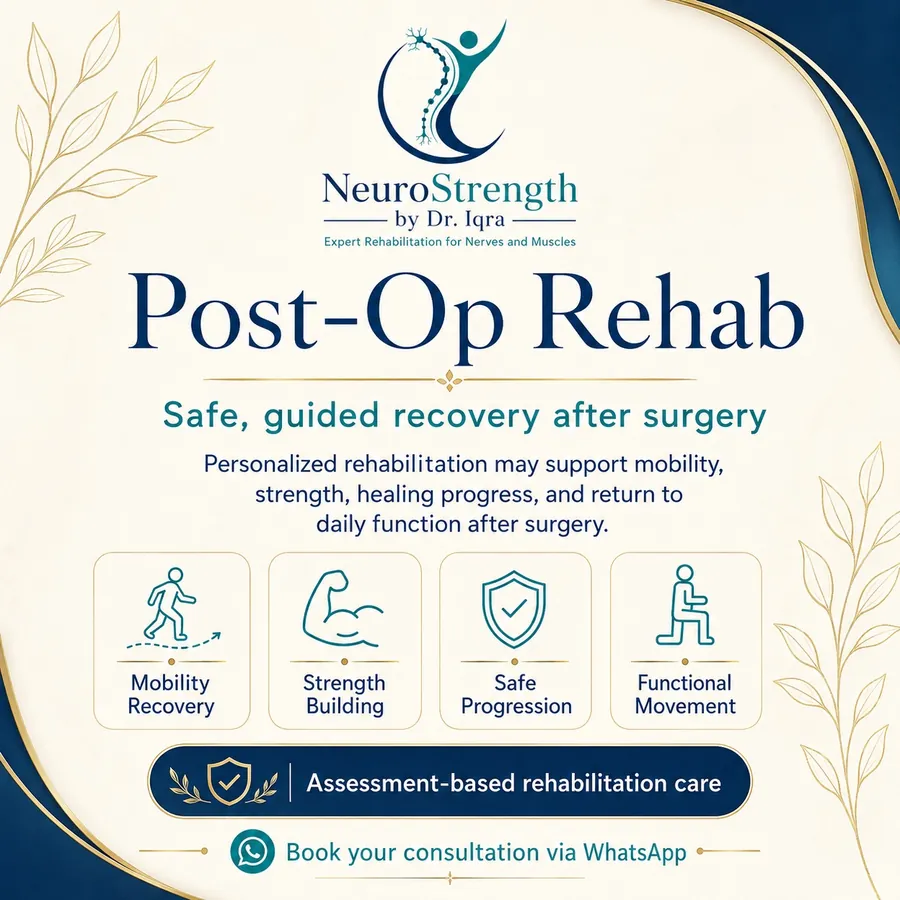
After surgery, tissues need time to heal while the body also needs safe movement to restore function. The correct balance depends on the procedure, surgeon instructions, wound status, pain, swelling, weight-bearing status and the person’s previous level of activity.
A post-operative programme may begin with education, gentle range-of-motion work, swelling management strategies and basic mobility, then progress to strength, control, endurance and task-specific practice.
From protection to confident movement
Early goals often focus on moving safely within medical precautions. Later stages may include improving walking quality, joint movement, muscle strength, balance and confidence with work or household activities.
The aim is not to rush recovery. Progressions are selected according to assessment findings and the expected healing stage, with referral back to the surgeon or physician if concerns arise.
What to bring to your first session
Bring available surgical notes, discharge instructions, imaging or reports, a list of medicines, and any written precautions from your surgeon. Comfortable clothing makes movement assessment easier.
If you have fever, new wound drainage, unexpected severe swelling, chest pain, shortness of breath or sudden calf pain after surgery, seek urgent medical care instead of waiting for a routine physiotherapy appointment.