Who this service may be suitable for
- People recovering after stroke or other neurological events
- Walking, balance or coordination difficulties
- Weakness, reduced control or movement confidence
- People who need structured practice for transfers and daily activities
- Families seeking clear home guidance alongside clinic sessions
What neuro rehabilitation focuses on
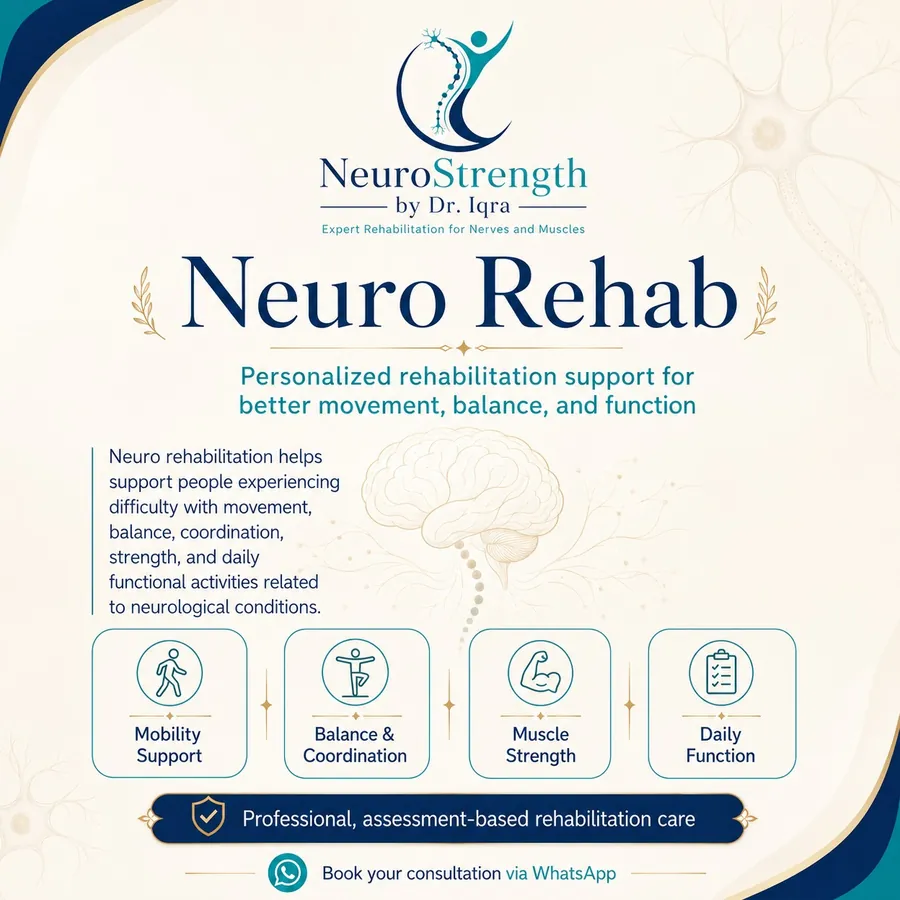
Neurological rehabilitation is not a one-size-fits-all exercise routine. The starting point is understanding how a person currently moves, which activities are difficult, and which goals matter most at home, work or in the community.
Physiotherapy may include task-specific practice, balance work, gait training, strength and endurance exercises, coordination activities, positioning advice and a home programme. The exact plan depends on clinical assessment, medical history and current abilities.
A practical, goal-based approach
At NeuroStrength, progress is organized around functional goals such as getting out of a chair more safely, standing with better control, walking with appropriate support, managing stairs, improving upper-limb use or increasing confidence during daily movement.
Progress can be gradual in neurological rehabilitation. Regular reassessment helps identify what is changing, where practice needs to be adjusted, and which strategies are most useful for the individual.
Family and caregiver guidance
When family members or caregivers are involved, clear guidance can make daily practice safer and more consistent. Sessions may include education on positioning, transfers, pacing, safe assistance and realistic home activities that reinforce clinic goals.
For medically complex cases, physiotherapy should remain coordinated with the treating physician or specialist. New or rapidly worsening neurological symptoms require urgent medical assessment rather than routine physiotherapy.